

Lawn diseases are very common in damp climates like Portland. Most of the underlying issues are due to fungal attack. Lawn disease can be treated with an effective method, natural spray, reducing moisture, and improving airflow.
In this blog, our experts at Monkeyman have listed common lawn disease treatment, along with prevention and maintenance tips for Portland, OR, homeowners.
Expanded Section: Common Lawn Diseases, Their Symptoms, and Effective Treatments
Portland’s cool-season grasses (mostly fescue, ryegrass, and bluegrass mixes) face several recurring fungal diseases due to our wet climate. Below is a deeper breakdown of what each disease looks like, why it happens, and the most reliable treatments, both natural and conventional.
1. Red Thread (Laetisaria fuciformis)
What It Looks Like (Symptoms)
- Faded pink, coral, or reddish “threads” or antler-like fibers sticking from the grass blades
- Affected patches appear light tan or pinkish
- Blades may look frayed or water-soaked
- Often spreads during long stretches of cool, wet weather
What Causes It
- Low nitrogen in the soil
- High humidity + poor airflow
- Excess shade or slow-drying lawns
- Common in underfed lawns or lawns with lots of tree cover
How to Treat Red Thread
Natural Treatments:
- Apply compost topdressing to strengthen soil biology
- Improve sunlight exposure (prune branches)
- Deep, infrequent watering only in the morning
Product-Based Treatments:
- Light nitrogen fertilizer (slow-release is best)
- Neem oil, sulfur, or copper fungicides for persistent cases
Red Thread typically disappears once nutrients and airflow improve—tree thinning often helps speed up recovery.
2. Dollar Spot (Clarireedia jacksonii)
Symptoms
- Small, round bleached spots the size of silver dollars, thus the name dollar spot.
- Grass blades have distinctive tan “hourglass” lesions
- Spots merge into larger areas if untreated
- The turf feels dry and brittle
Causes
- Low soil moisture + high humidity at night
- Poor nitrogen levels
- Thatch buildup
- Overwatering in shade-heavy yards
Treatments
Natural:
- You can apply neem oil weekly for 2–3 weeks
- Improve drainage and reduce thatch
- Increase sunlight with strategic pruning
Products:
- Azoxystrobin or propiconazole
- Balanced slow-release fertilizer
Dollar Spot thrives in lawns that stay wet overnight—watering adjustments alone fix many cases.
3. Brown Patch (Rhizoctonia solani)
Symptoms
- Large brown or dark circular patches, often with a smoky or dark outer ring (“smoke ring”)
- Greasy or water-soaked turf appearance
- Grass blades pull up easily
- Spreads aggressively during warm, moist nights
Causes
- Overwatering during summer
- Excess nitrogen in hot weather
- Warm nighttime temps
- Poor airflow near fences or beneath tree canopies
Treatments
Natural:
- Apply sulfur-based fungicide
- Improve airflow around the lawn
- Water mornings only, 1–2 times a week
- Reduce summer fertilizer use
Products:
- Propiconazole
- Myclobutanil
- Azoxystrobin for severe spreading
Brown Patch hits fescue lawns hardest, commonly found in shaded backyards and tree-lined properties.
4. Snow Mold (Typhula & Microdochium Fungus)
Common after Portland’s long, damp winters.
Symptoms
- White, pink, or gray matted patches appearing after snow or extended moisture
- Dead, matted grass that looks flattened
- May smell musty
- Pink Snow Mold (more severe) has a salmon-pink tint
Causes
- Excess moisture trapped under leaves or snow
- Thick thatch
- Late-fall overfertilizing
- Poor winter lawn prep
Treatments
Natural:
- Gently rake matted areas to allow airflow
- Apply compost to help with recovery
- Reduce shade to help future drying
Products:
- Chlorothalonil or propiconazole is applied in late fall
- Spring aeration to improve drainage
Note:
Most Snow Mold damage recovers naturally once temperatures warm, raking and light fertilizer help speed regrowth.
5. Lawn Rust (Puccinia spp.)
Symptoms
- Grass blades coated in powdery orange spores
- Shoes and mower blades turn orange after walking through affected areas
- Slow-growing grass that looks thin or pale
- Often hits shaded, low-nitrogen areas
Causes
- Shade and poor airflow
- Low nitrogen
- Stressed grass
- Overwatering or watering at night
Treatments
Natural:
- Add nitrogen to strengthen turf
- Mow more frequently (removes infected blades)
- Prune trees to reduce shade
Products:
- Rust often resolves with cultural changes alone
- For severe cases, use myclobutanil or azoxystrobin
6. Leaf Spot / Melting Out (Bipolaris & Drechslera)
Leaf spot is often confused with drought stress.
Symptoms
- Purple, black, or dark spots on individual blades
- Blades may thin, collapse, or “melt” away
- Entire areas turn brown if untreated
- Worse during warm, humid weather
Causes
- Overwatering
- Dull mower blades
- Compacted soil
- Nitrogen deficiency
Treatments
Natural:
- Sharpen mower blades
- Improve drainage
- Topdress with compost to build turf resilience
Products:
- Azoxystrobin
- Chlorothalonil
- Myclobutanil
7. Fusarium Patch (Microdochium Patch)
Symptoms
- Small, water-soaked patches that expand into copper or orange circles
- Edges may appear pink in cool, wet weather
- Very common in fall/winter in the PNW
Causes
- Overwatering in winter
- Heavy thatch
- Shade + poor airflow
- Cool, damp conditions (Portland prime season)
Treatments
Natural:
- Improve drainage
- Reduce watering
- Prune trees to increase airflow
Products:
- Propiconazole
- Trifloxystrobin
- Thiophanate-methyl
8. Fairy Ring (Several Fungal Species)
Symptoms
- Dark green rings or arcs
- Sometimes mushrooms follow the ring pattern
- Soil may become hydrophobic (repels water)
Causes
- Decaying organic matter underground
- Old tree roots
- Very dry soils inside the ring
Treatments
Natural:
- Deep aeration
- Break up the ring by watering deeply
- Organic compost to improve soil structure
Products:
- Fungicides often don’t fully eliminate the fairy ring
- Soil-wetting agents can help water penetrate
Lawn Disease Treatment Home Remedies
If you want to keep the treatment simple, these remedies often work well when caught early.
1. Improve Airflow
- Rake out clumps of grass.
- Dethatch areas thicker than ½ inch.
- Prune nearby trees to reduce shade and speed up drying.
2. Fix Watering Habits
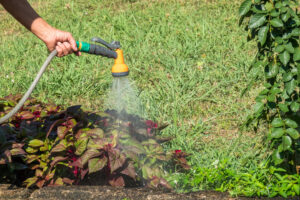
- Water deeply once or twice per week, not daily.
- Water only in the morning, so the lawn dries before evening.
3. Natural Sprays
- Baking soda spray: 1 tbsp baking soda + 1 gallon water + a drop of dish soap.
- Neem oil: Works well on most fungal diseases.
- Compost tea: Boosts soil microbes to fight fungus naturally.
4. Balance Soil pH
Portland lawns often lean acidic. Pelletized lime can help with many fungal issues.
When to call a pro: If patches keep spreading, don’t recover, or return seasonally, the disease may be tied to shade or poor airflow from overgrown trees.
How to Treat Infected Buffalo Grass
Buffalo grass is tough but still susceptible to brown patch, dollar spot, and leaf spot.
Buffalo Grass Treatment Steps
- Water deeply and infrequently (buffalo hates frequent watering).
- Avoid heavy nitrogen, especially in summer (can worsen brown patch).
- Rake and remove thatch, as buffalo lawns can build up dense organic layers.
- Use natural fungicides like neem oil or sulfur for mild infections.
- Remove heavily infected patches and overseed with buffalo grass seed.
- If tree shade is a factor, prune branches to improve sunlight penetration.
Prevention & Long-Term Maintenance (The Key to a Fungus-Free Lawn)
Once you fix the disease, keeping it from coming back is the real struggle. Portland’s long rainy seasons mean prevention matters just as much as treatment. So your lawn needs consistent care and maintenance. Our experts share the best methods to prevent lawn disease-
1. Improve Soil Drainage
You can improve soil drainage by increasing aeration. Aerate once per year, especially in clay-heavy or compacted areas. Better drainage = fewer fungal outbreaks. Fungus grows in water-clogged or moisture-trapped areas often.
2. Water Smarter
You must incorporate a smart water routine for your lawn. Water deeply, not frequently, stick to early morning only, and avoid automatic watering during rainy stretches. This helps grass dry out faster, your best defense against fungus.
3. Manage Tree Shade & Airflow
Overgrown canopies trap moisture and slow drying.
Selective pruning allows:
- More sunlight to reach the turf
- Faster evaporation
- Less fungal pressure
MonkeyMan can assess exactly which branches are impacting turf health.
4. Fertilize Correctly
Low-nitrogen lawns are more disease-prone, but too much nitrogen (especially in summer) encourages brown patch.
Follow seasonal Portland fertilization guidelines or ask for a soil test.
5. Mow Properly
- Keep grass 3–4 inches tall
- Never remove more than ⅓ of the blade
- Always mow with a sharp blade
Short, stressed grass invites fungus.
6. Reduce Thatch
A thatch layer over ½ inch traps moisture. Dethatch in late spring or early fall.
7. Overseed with Disease-Resistant Varieties
Fescue-heavy blends hold up better in Portland’s climate.
Prevention is about creating a lawn that dries quickly, breathes well, and stays nutrient-balanced.
When to Call MonkeyMan in Portland, OR
As we’ve learnt about the lawn disease treatment methods, it doesn’t mean professional care is overlooked. These natural methods work only when the disease at the preliminary stage. Moreover, working with unknown chemicals poses a higher health hazard.
Call a pro if:
- The lawn keeps getting fungus each year
- Patches spread quickly
- The lawn stays wet/shaded
- You suspect trees are the real cause
MonkeyMan helps Portland homeowners diagnose lawn disease, eliminate the source, and create healthier long-term growing conditions.
Conclusion
To wrap up, lawn disease can make even the most beautiful patio ugly. Not just outer beauty, it can spread fungal disease to your pets and the surrounding large trees. So lawn disease treatment is necessary. Either you can try the natural home remedies, or if that doesn’t work, contact Monkeyman for an in-depth assessment and lawn disease treatment.