

Trees make Oregon beautiful, from the tall evergreens to the maples that turn gold every fall. But even the strongest trees can grow too large or too wild if left alone. Overgrown trees might block sunlight, drop heavy limbs, or damage nearby structures. The good news? With the right care, you can keep your trees healthy, balanced, and safe year-round.
This guide from Monkeyman’s Tree Service in Lake Oswego, Oregon, explains what overgrown trees are, how to trim or remove them, when to do it, and what local homeowners should know before cutting.
What Is an Overgrown Tree?
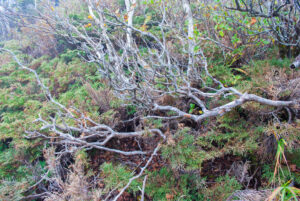
An overgrown tree has grown beyond what’s safe or healthy for its space. It might have thick branches stretching over your roof, roots lifting your driveway, or a canopy so dense that grass below can’t survive.
Oregon’s mild, wet climate helps trees grow quickly, but that also means they can outgrow their space faster than you realize. Without pruning, branches can become tangled, heavy, and unstable.
What Is Tree Overgrowth?
Tree overgrowth means the tree’s natural growth has gone unchecked. This can happen in the canopy (the top of the tree), the trunk, or the roots underground.
When growth gets excessive:
- Branches rub or split.
- Roots spread into foundations or pipes.
- Limbs become too heavy and prone to breaking.
Unchecked overgrowth not only makes your property look messy, but it can also become a safety hazard during Oregon’s windy winter storms.
How to Cut an Overgrown Tree
If your tree looks overgrown, trimming it properly will help restore balance and prevent damage. Here’s how to do it safely:
- Inspect the tree first. Look for dead, cracked, or hanging limbs.
- Start small. Remove dead or broken branches first these are most likely to fall.
- Thin the canopy. Cut select interior branches to let light and air flow through.
- Avoid topping. Never cut the main trunk or large upper limbs unless necessary.
- Don’t overdo it. Never remove more than 25–30% of the live branches in one season.
If the branches are too high or close to power lines, don’t risk it; call Monkeyman’s Tree Service. Our certified arborists have the equipment and experience to trim safely.
What Does an Over-Pruned Tree Look Like?
An over-pruned tree looks thin, weak, and uneven. When too many branches are removed at once, the tree can’t make enough food through photosynthesis. You might notice:
- Sparse leaves or bare spots.
- New weak sprouts are growing straight up.
- Sun-scalded bark or leaning limbs.
Over-pruning stresses the tree and can shorten its life. The key is balance, removing just enough to keep it safe and strong without stripping its natural form.
How to Get Rid of Overgrowth
You don’t always need to remove a tree to fix overgrowth. Try these steps first:
- Regular trimming: Schedule pruning once a year or every two years.
- Crown thinning: Reduce canopy density for better light and airflow.
- Root control: Use root barriers or professional pruning to stop invasion.
- Tree removal (if needed): If the tree is dying or unsafe, removal might be the only option.
At Monkeyman’s Tree Service, we start with an inspection to decide whether trimming or removal is the best long-term solution for your property.
What’s the Cheapest Time of Year for Tree Removal?
The cheapest time to remove trees in Oregon is usually late winter or early spring, roughly January through March.
Here’s why:
- Trees are dormant, so there’s less sap and fewer leaves.
- Demand is lower, so scheduling is easier and often cheaper.
- The ground is firmer, making it easier for equipment to access the area.
Summer removals tend to cost more because crews are busier and the trees are heavier with foliage.
What Is the Best Month to Cut Down a Tree?
For most Oregon trees, the best month to cut down or prune is between February and early April, before new growth begins. Cutting during dormancy reduces stress and helps wounds heal faster.
Avoid trimming in late fall or mid-summer when trees are either preparing for cold weather or actively growing.
Is It Cheaper to Remove a Tree in Winter?
Yes. Winter tree removal often costs less because it’s off-season. Crews have more availability, and without leaves, trees are easier to handle. It’s also better for your landscape — frozen or dry soil prevents yard damage from heavy machinery.
What Is the Average Cost of Having a Large Tree Removed?
Costs depend on the size and location of the tree. In Oregon, typical ranges are:
- Small trees (under 30 ft): $300–$600
- Medium trees (30–60 ft): $700–$1,200
- Large trees (60+ ft): $1,500–$3,000 or more
Trees close to buildings, fences, or power lines usually cost more because they require precision removal and additional safety gear.
How to Reduce the Cost of Tree Removal
You can lower your costs with a few simple steps:
- Plan: Don’t wait until a storm causes damage.
- Combine jobs: Trimming multiple trees at once can reduce per-tree cost.
- Provide clear access: Move vehicles and furniture before the crew arrives.
- Get local quotes: Working with a local company like Monkeyman’s Tree Service in Lake Oswego avoids extra travel fees.
Local Tree and Property Laws in Oregon
While Oregon doesn’t have statewide “tree laws,” many local cities, including Lake Oswego, have ordinances about tree removal and property boundaries.
If a tree crosses into your neighbor’s yard:
- You can trim branches up to your property line as long as you don’t damage the tree.
- If your neighbor’s tree poses a risk (for example, it’s dead or leaning), you can ask them to remove it. If they refuse, you may report it as a hazardous tree under the city code.
- If a healthy tree falls during a storm, each homeowner handles the cleanup on their own.
When in doubt, it’s best to contact your local city arborist office before doing major work.
How to Trim Back an Overgrown Tree Properly
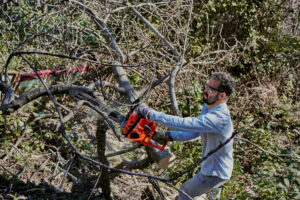
Here’s how to keep your trees healthy while trimming them back:
- Remove crossing or rubbing branches. These create weak points.
- Cut outside the branch collar. This helps the tree seal naturally.
- Keep the natural shape. Don’t cut the main trunk or “top” the tree.
- Work gradually. If it’s very overgrown, trim a little each season instead of all at once.
- Use clean tools. Disinfect saws after cutting diseased branches.
How Far Back Can You Trim a Tree Without Killing It?
Never remove more than 25–30% of a tree’s live canopy at once. Removing too much can shock the tree and prevent it from producing enough food. For older or stressed trees, it’s best to trim less and do it more often.
What Is the Best Time of Year to Trim Back a Tree?
In Oregon, late winter to early spring is the best time to prune. The tree is dormant, which minimizes sap loss and insect exposure. For flowering trees, wait until after the blooming season to avoid cutting off buds.
What Part of a Tree Branch Should Not Be Cut?
Avoid cutting into the branch collar, that small ridge where a branch meets the trunk. This area helps the tree heal and protect against decay. Also, avoid leaving long stubs; they rot easily and attract pests.
Why Controlling Overgrown Trees Matters
Overgrown trees can:
- Drop heavy limbs during Oregon’s winter storms.
- Block light and airflow, encouraging mold or moss.
- Damage driveways, fences, or roofs.
- Hide pests and weaken nearby plants.
Regular pruning keeps your trees strong, improves safety, and maintains the beauty of your landscape.
Final Thoughts
Overgrown trees might look harmless at first, but they can quickly cause property damage or safety hazards if ignored. Regular trimming, pruning, and inspection can save you thousands in the long run.
If your trees in Lake Oswego, Oregon, are overgrown, leaning, or showing signs of stress, it’s time to call in the experts.
Monkeyman’s Tree Service offers safe, affordable, and professional tree trimming, pruning, and removal across Clackamas County and surrounding areas.
📍 Address: 17280 Boones Ferry Rd, Lake Oswego, OR, United States
📞 Phone: +1 503-358-8754
🌐 Website: monkeymans.octopi-digital.com/
Keep your trees healthy, your yard safe, and your property looking its best. Contact Monkeyman’s Tree Service today for your free estimate.