

Taking down a tree near a power line costs more than the same tree in an open yard, because the crew can’t simply drop it. The tree removal near power lines cost you end up paying also depends on a second question: whether the work is the utility’s job or yours.
In the Portland area that utility is usually PGE, and its rules decide a lot about who calls whom first.
Tree removal near power lines cost by tree height
Expect the same height-based ranges as any removal, then add room for the extra equipment and crew that line work needs. This Old House’s cost guide, updated in March 2026, lists these national ranges for removing a tree:
| Tree height | Typical removal cost | What it buys |
|---|---|---|
| 30 feet or less | $150 to $450 | Small ornamental or fruit trees |
| 30 to 60 feet | $450 to $1,200 | Medium trees, usually climbed and cut in sections |
| 60 to 80 feet | $800 to $1,500 | Large trees, more crew time |
| 80 feet or more | $1,000 to $2,000 | The tallest trees, where heavy equipment may come in |
Those are national figures, so Portland quotes can land on either side. The same This Old House guide to tree removal costs says a tree close to power lines is more complex to remove and may need specialized equipment or extra crew members, but it puts no dollar amount on that.
So ask for the line-related work as its own line on the quote. That lets you compare two bids honestly.
The guide’s overall average for removing a tree is $906, which makes a decent anchor for a straightforward job. Permits and compliance fees are usually added by the professional you hire, so ask whether the quote already includes them.
Emergency jobs run higher. The same guide says storm removal can cost up to $5,000, and that homeowners insurance may cover part or all of it.
Who pays when PGE does the trimming
When the job is keeping branches away from PGE’s own wires, PGE does the work. Its contract crews prune along power line rights of way every two to three years, and Oregon Public Utility Commission regulations require it.
On PGE’s tree maintenance page, the company says to keep at least 10 feet of clearance around primary distribution lines, the ones at the top of the pole above the transformer. Pruning 10 feet around them is common, and the crew may cut extra distance to last until the next visit.
Removing a whole tree is uncommon. If a dead or dying tree is a hazard, a PGE forester contacts you.
Leftover wood is the part to ask about. Ohio’s consumers’ counsel notes in its fact sheet on utility tree trimming that trees are considered the homeowner’s property, so consumers may have to arrange debris removal at their own expense. That’s Ohio, not Oregon, so confirm with PGE whether cleanup is included before you assume.
Who pays when you hire someone yourself
If you want the tree handled now, rather than on PGE’s cycle, you hire a contractor and the invoice is yours. PGE vets and approves local tree trimming contractors for work near its lines, and its page on line-qualified tree trimming warns that homeowners who hire unqualified people may face significant fines.
The alternative is to wait for the PGE-contracted crews on their routine cycle. You can ask about timing at the PGE Tree Hotline, 503-736-5460, Monday through Friday, 8 a.m. to 3:30 p.m.
We’re licensed in Oregon (CCB #206934), but ask any contractor, us included, whether they’re qualified for work near energized lines before you sign anything. Our guide on how to hire a tree service company lists the other questions worth asking.
Service wires are a gray area
Service wires run from the secondary line to your house. PGE says it prunes around them only when branches strain or abrade the wires, and it asks customers not to plant under or around them.
PGE’s page doesn’t say who owns the service wire, so call the hotline before you cut anything near one.
Underground power changes the answer
If your property has underground power, PGE says it won’t do maintenance work on it. The trees there are yours to manage like any other trees, though digging for a stump brings a different rule: PGE says to call 811 at least two business days before you dig.
Digging comes up with stump grinding, which This Old House describes as typically an extra service on top of the removal price.
How long PGE’s trimming takes and how to get on its schedule
A neighborhood project takes three to four months on average, so a tree that’s next on PGE’s route may not be touched for a while. If the wait is the problem, the tree removal near power lines cost you’d pay a qualified contractor buys speed.
PGE sends a letter before it works in a neighborhood. You can also email forestry@pgn.com or call the hotline to ask where your street stands.
If a letter has already arrived, hold off on hiring anyone for the same branches. The utility’s crew is already scheduled to prune around its lines, and a second pruning from a contractor on top of that could mean paying for the same cut twice.
Why line work needs a different crew
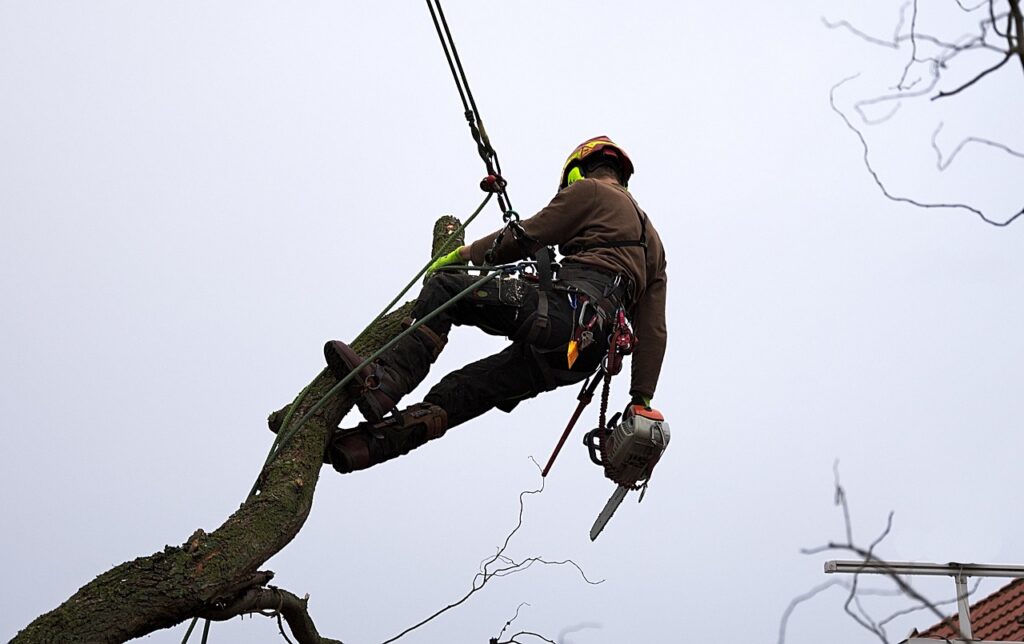
Anyone who works close to energized wires needs training the average tree crew doesn’t have, which is why PGE keeps an approved list. That training is part of what a higher tree removal near power lines cost pays for. A contractor who isn’t on it may still be skilled, but you carry the fine risk if the work goes wrong.
Do-it-yourself work carries the same exposure. This Old House warns that attempting a large tree alone could mean fines if you accidentally hit a power line.
Certified arborist input helps when the question is whether a tree needs to come down at all. Our arborist services cover that assessment, and a leaning or hollow tree is worth a look before it becomes a dead tree removal job or a storm call.
Steps to take before you book any tree work
- Call the PGE Tree Hotline and say where the tree is and which wires it’s near.
- Ask whether the tree falls inside PGE’s upcoming trimming cycle, and whether cleanup is included.
- If you’re hiring, ask each contractor whether PGE approves them for line work.
- Get the line-related work priced separately, plus stump grinding and haul-away.
- Call 811 before any digging.
For a tree that has already come down in a storm, our emergency tree service is the page to start from. When the removal is planned, tree removal and tree pruning are where to look.
Frequently asked questions
Can I trim branches near a power line myself?
Not near the wires. PGE asks you to call its Tree Hotline before starting any work, and it says homeowners who hire unqualified people for work near power lines may face significant fines.
How often does PGE trim trees near its lines?
PGE’s contract crews return on a routine cycle of every two to three years. A project in a neighborhood takes three to four months on average, and PGE sends a letter first.
Will insurance cover tree removal near power lines cost after a storm?
It may. This Old House says homeowners insurance may cover part or all of the cost of emergency removal, so check your policy before you pay.
Does the quote include permit fees?
Often it does. This Old House says the professional you hire will typically add permit costs and any compliance fees to the overall expense of the project.
Who do I call first about a tree near a power line?
Call the PGE Tree Hotline at 503-736-5460. It’s staffed Monday through Friday from 8 a.m. to 3:30 p.m.
Sources
- Tree Safety & Maintenance — Portland General Electric
- Line qualified tree trimming — Portland General Electric
- Utility Line Clearing and Tree Trimming — Ohio Consumers’ Counsel
- How Much Does Tree Removal Cost? (2026 Pricing) — This Old House
Cover photo by https://kaboompics.com/ on Pexels