

A tree that lands on a roof, a fence or a driveway leaves you with a handful of decisions in the first hour, and the order you make them in affects how much of the bill you carry. This guide covers what to do when a tree falls on your property, from the first safety check to the call that gets the wood off your land for good. Monkeyman’s has cared for Portland-area trees since 2008, and this is the sequence we’d want a neighbor to follow.
In short, the steps run like this:
- Get everyone clear and check for power lines and gas.
- Call 9-1-1 if anyone is hurt or a line is down.
- Photograph everything before anything moves.
- Cover openings to keep weather out.
- Call your insurer.
- Bring in a licensed, insured crew for the removal.
- Check the trees that are still standing.
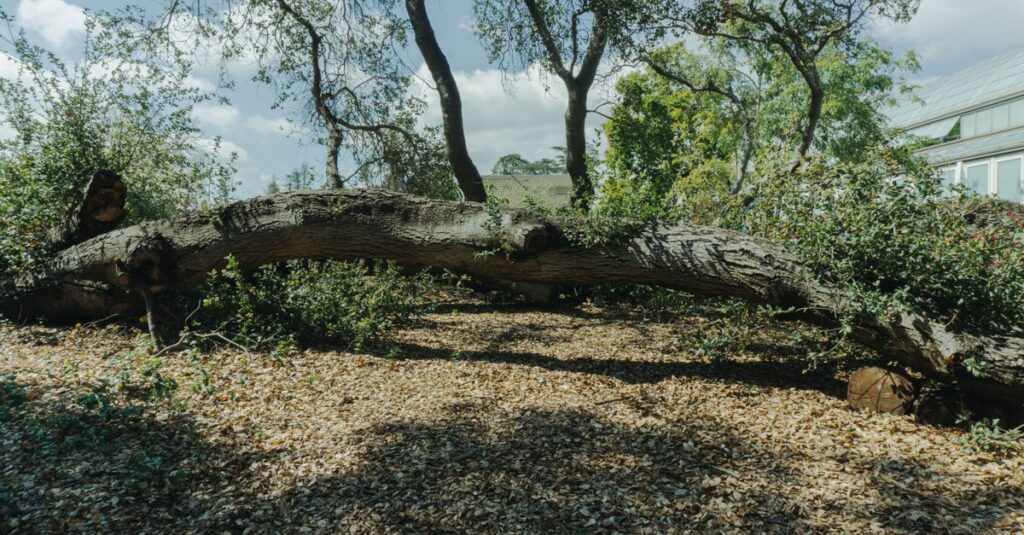
Cover photo by Phu Huynh on Pexels
What to do when a tree falls on your property: the first few minutes
Get everyone out of the area and wait until it’s safe before you assess anything. If you see downed power lines or smell gas, move people away and call 9-1-1 or your utility. Amica’s guide to what to do if a tree falls on your home says to stay at least 30 feet from downed lines.
A tree resting against a wire is a utility problem first and a tree problem second. Don’t walk up to check, and don’t let kids or pets wander out to look.
Once the area is safe and nobody is hurt, you can start looking at the damage from a distance. A tree on the roof or through a window is usually obvious. Cracked rafters, a sagging ceiling or a pulled-away gutter takes a closer look later, with a professional.
Photograph the damage before anything moves
Take wide shots and close-ups from several angles, and do it before cleanup starts. Amica’s guidance is to photograph anything before you move it, because an adjuster will be working from what you can show.
Photos are the one step in what to do when a tree falls on your property that you can’t redo later. Shoot the tree where it lies, the trunk’s break point, the stump or root base if you can see it, and every surface it touched. Include fences, cars, sheds and landscaping, even when the damage looks minor. If the light is poor or it’s still storming, take a first set now and a second in daylight, and keep both. Note the time you took them, since a record made the same day is easier for an adjuster to follow.
Keep rain and animals out without touching the big limbs
Tarps or boards over the opening are a reasonable stopgap. They keep out water, weather and animals until a contractor can make real repairs, and Amica says to leave large limbs to professionals.
The reasoning is simple. A heavy limb that’s pressing on a roof or leaning on a wall can shift the moment someone cuts it, and the person under it pays for the mistake.
If the damage is serious, or the tree is blocking a driveway or street, that’s when emergency tree service earns its name. We’ve also put together a step-by-step on what to do in the first 24 hours after a storm, which covers the storm-night version of this same problem.
Does insurance cover a tree that fell on your house?
Usually yes, when the tree hits your home or another covered structure, and the claim goes on your own policy. Insurance.com puts it plainly: homeowners insurance covers damage to your home from a fallen tree, even when the tree grew on a neighbor’s land.
Wind and lightning are covered perils under standard policies, according to Amica, but your policy’s declarations page is the final word on limits and deductibles. Call your insurer once everyone is safe. They may also have contacts who can secure the house and remove the tree.
You can typically file by phone, through your agent or online. An adjuster then inspects the damage and works out the repairs, the costs and which coverages apply, so the photos you took earlier go straight into that conversation. Tell the adjuster how the tree fell, what it hit, and what you’ve already done to protect the house.
Who pays for fallen tree removal is the part that surprises people. Here’s how tree fell on house insurance generally breaks down, and the same split applies when a tree fell on my fence or shed.
| Situation | Whose coverage usually responds | What removal looks like |
|---|---|---|
| Tree hits your house or a covered structure | Your homeowners policy, you pay your deductible | Typically capped at about $500 to $1,000 per tree |
| Tree falls and hits nothing insured | Generally none | Generally no debris-removal coverage, though some insurers pay if it blocks a driveway or an accessibility ramp |
| Tree hits your car | Comprehensive auto coverage | Not a homeowners claim |
| Dead or diseased tree still standing | None | Never covered |
The $500 to $1,000 range comes from Insurance.com, and a blocked driveway or ramp is the exception named by the insurance firm Porte Brown in its guide to fallen trees. Policies differ, so treat both as general ranges.
Put a cap that low next to a deductible and a large trunk, and the removal bill can end up with you even when the claim is approved. Ask your adjuster what your policy allows before you sign a removal contract.
What to do when a tree falls on your property from a neighbor’s yard
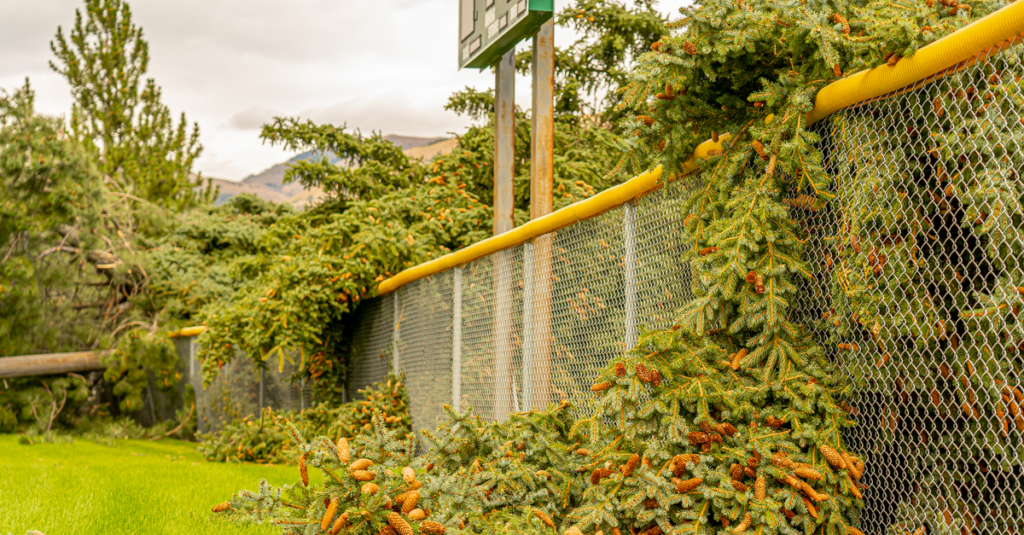
Photo by Castorly Stock on Pexels
If the tree looked healthy and nobody knew of a problem, you’ll typically file with your own insurer. If it was known to be diseased or hazardous, Amica says the neighbor’s insurance may become involved.
The whole question turns on what the owner knew. Insurance.com recommends building a record: complaints sent by registered mail, letters to the local government, and arborist or inspection records, with proof that the neighbor actually received the warnings.
On the liability side, Oregon Catalyst, a publication of a property owners’ association, argues that an owner generally isn’t liable when a tree falls onto a neighbor’s land in a storm. It cites Oregon appellate decisions that allow liability when a tree was planted negligently, recklessly or intentionally with regard to the neighbor’s property, and it adds that this “isn’t going to happen very often.” It’s an opinion piece, not legal advice, so an Oregon attorney is the right call for a real dispute.
The reverse case comes with its own wrinkles. When your tree damages a neighbor’s house, Insurance.com says their insurance usually pays, and they may ask you to cover their deductible even though you’re not legally obligated to. Some policies also carry limited coverage for minor damage you cause to a neighbor’s property, often around $1,000, even without legal liability, so it’s worth asking your agent before you refuse outright.
If a neighbor’s tree is leaning or dying today, write to them now, keep a copy, and consider a Certified Arborist report that documents the tree’s condition. That record is what a later claim would lean on.
Choosing a crew for fallen tree removal
The insurance call is half of what to do when a tree falls on your property. The other half is the person holding the saw. Pick a company that’s licensed, bonded and insured, and get more than one quote. Amica also advises caution about on-the-spot offers, which tend to show up on your doorstep a day after a storm.
On timing, Insurance.com says to wait for your insurer’s direction before removing a fallen tree, unless it’s a safety hazard or blocking a road. A tree across a driveway you need to leave by is a hazard. A tree lying harmlessly in the back lawn can wait for your adjuster.
Our own license number is CCB #206934, and ISA Master Arborist is among our credentials. For the removal itself, our tree removal crews cover Portland and everywhere within 25 miles of the city. Ask any company for its license number and proof of insurance before it starts, ours included.
The tree isn’t always the end of the job. A cut trunk leaves a stump behind, and our stump grinding service deals with it once the heavy work is done.
Checking the trees you still have
A tree down is a good prompt to look at its neighbors. Removing a dead or diseased tree that hasn’t fallen is never covered by homeowners insurance, according to Insurance.com, so catching one early is the only way to avoid paying the whole bill.
Look for the signs a tree is struggling: dead branches, bark that’s peeling away, a lean that’s new, or fungus at the base. Amica suggests consulting an arborist whenever a tree seems diseased or unstable, and says regular pruning of trees near the house may reduce risk. Our dead tree removal page explains how we handle trees that are past saving.
If the tree that fell was one of several of the same kind, or planted in a similar spot, its neighbors may share the problem. Our guide to wind-resistant trees for the Pacific Northwest is worth reading if you’re replanting.
Knowing what to do when a tree falls on your property is easier the second time, and better still if you’ve read your policy before the first. Pull it out once the dust settles and read the removal limit and the deductible. Amica recommends reviewing coverage at least once a year, and knowing those two numbers before the next storm is far less stressful than learning them afterward.
Frequently asked questions
Who pays to remove a tree that fell but didn’t hit anything?
Usually you do. Porte Brown says there’s generally no coverage for debris removal when a tree hits nothing insured, though some insurers pay if it blocks a driveway or an accessibility ramp.
Can I be held liable if my tree falls on my neighbor’s property?
Insurance.com says your neighbor’s insurance usually pays for their damage, but you may still be liable if you were negligent, meaning you knew the tree was dead or diseased and didn’t act. A written warning from the neighbor, with proof they sent it, is the kind of evidence an insurer will want to see.
Does homeowners insurance cover my car if a tree falls on it?
No. Insurance.com notes that homeowners insurance doesn’t cover cars, and comprehensive auto insurance is what responds. Call your auto insurer as well as your home insurer.
Should I cut up the fallen tree myself?
Leave large limbs to professionals, as Amica advises, and hold off on removal until your insurer weighs in unless the tree is a hazard or blocks a road. Photograph it first.