
What Tools Do Professionals Use for Tree Limb Removal?
Professional arborists rely on a mix of precision cutting tools, safety gear, and rigging equipment to safely and efficiently remove limbs. Precision matters: poor cuts can injure the tree, cause decay, or leave dangerous stubs.
1. Hand Pruners (Bypass Style)
These are the foundation of any pruning toolkit. Designers like Felco or ARS produce sharp, ergonomic pruners that make clean cuts on small live branches up to about ¾” in diameter, which helps the tree heal faster.
2. Loppers
Long-handled loppers provide leverage to cut thicker branches (up to around 1½–2″). Their length gives reach without a ladder and reduces strain. Pros often choose bypass types because they make cleaner cuts on live wood.
3. Pruning Saws
For limbs too big for hand tools, pruning saws are essential. With curved blades and sharp teeth, they cut smoothly through larger limbs (from about 2 to 6″). Many arborists prefer quality saws that cut on the pull stroke for control and cleaner wounds.
4. Pole Pruners & Pole Saws
These extend your reach from the ground, so you don’t have to climb or balance on ladders. Pole pruners combine cutting blades with long poles, while pole saws add a chainsaw-style blade on an extension pole for thicker branches.
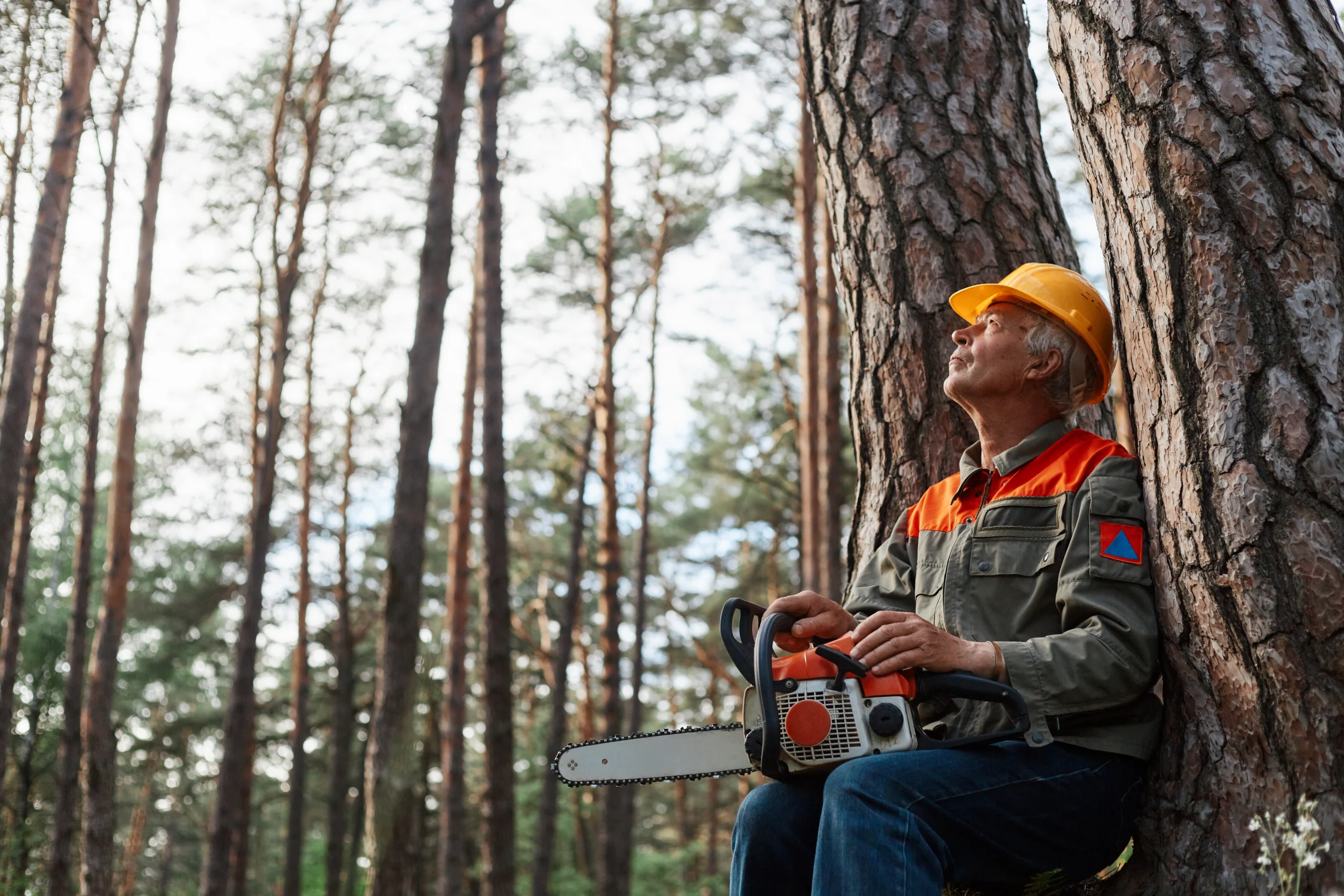
5. Chainsaws (Used With Caution)
Chainsaws are powerful and efficient for cutting large limbs and heavy branches, but on a ladder or unstable footing, they’re dangerous. Professionals use them with training, personal protective equipment (PPE), and safety protocols.
6. Rigging and Climbing Gear
When limbs are high or over structures, arborists use rigging lines, pulleys, friction devices, harnesses, and carabiners to lower sections safely without damaging property.
Small Tree and Limb Removal Tools for Homeowners
Not every limb project needs professional equipment. For small trees and low limbs, these tools are safe and practical:
- Hand Pruners – great for twigs and small branches under ¾″.
- Loppers – handles medium branches up to ~1½″.
- Hand Pruning Saw – ideal for branches 2–5″ thick.
- Manual Pole Pruner – reach medium branches without climbing.
- Gloves, Safety Glasses, Helmet – basic PPE for every cut.
These tools are affordable and widely available, but they still require safety awareness and proper cuts.
Is It Safe to DIY Tree Limb Removal?
Short answer: It depends on the size of the limb and the height involved — and whether you really know what you’re doing.
DIY limb removal might feel doable when:
- The limbs are low and easily reachable
- The branches are thin
- They’re not tangled with power lines
- You have a good footing and no ladders
But many homeowners underestimate the risks involved. Tree work often involves heights, chainsaws, unstable branches, and unpredictable physics factors that lead to falls, cuts, and serious injuries every year.
Here’s what even experienced DIYers warn against:
- Using a chainsaw from a ladder
- Cutting overhead without support
- Misjudging how a branch will fall
- Not having proper safety gear
- Removing limbs near power lines
Professional arborists spend years training to manage these hazards. If you’re in doubt, calling an expert is the safest approach.
Safety Gear That Matters
Before even thinking about cutting a limb, professionals protect themselves with:
- Helmet with a face shield
- Eye protection
- Hearing protection
- Cut-resistant gloves
- Sturdy boots
- Climbing harness and ropes if above ground level
Safety isn’t optional; it keeps you alive and keeps your property intact.
How Professionals Decide What Tools to Use
An arborist doesn’t pick tools randomly. The decision comes down to:
Branch size — small cuts with pruners, large cuts with saws.
Height and reach — ground-based tools vs. rigging systems.
Tree health — dead wood requires different cuts than live wood.
Location — near roofs, sidewalks, or power lines demands precision.
What might look like a quick trim could easily become a major safety hazard if the cut isn’t planned.
When to Call a Professional Tree Service
You should consider calling pros like MonkeyMan Tree Service when:
- The limb is large and heavy
- It’s over structures or near power lines
- You’d need a ladder or climbing to reach it
- You lack proper tools and safety gear
- The tree has a disease or decay
Removing heavy limbs isn’t just cutting wood — it’s managing risk and tree health.
Final Takeaway: Tools Matter, But So Does Safety
Whether you’re tackling a small yard project or facing a major limb hanging over your roof, knowing the right tools makes the job safer and more effective. Hand pruners, loppers, pole saws, and pole tools are great for small jobs. But once you’re dealing with large branches, heights, or structural risk, professional gear and experience are worth the investment.
MonkeyMan Can Be Your Solution
If you’re in the Portland, Oregon area and you’re facing a challenging limb situation, ask yourself whether DIY is worth the risk, especially with unpredictable PNW weather and neighborhood safety in play. MonkeyMan Tree Service offers professional limb removal with arborist-grade tools, trained crews, and a focus on safety and tree health.
Get in touch for safe, efficient limb removal and tree care. Your yard (and your peace of mind) will thank you.
FAQ’s About Tree Limb Removal Tools
Q1:What is the best tool for cutting tree limbs?
Ans: Pruning saws and loppers are best for medium limbs, while chainsaws are used for large branches.
Q2:Can I remove tree limbs myself?
Ans: Yes, for small branches under 2 inches. Larger limbs or high branches should be handled by professionals.
Q3:What tool cuts thick tree branches?
Ans: A pruning saw or chainsaw, is commonly used to cut thick tree limbs.