

No homeowner wants to watch a tree on their property weaken or die, whether it happens suddenly or gradually. While trees are naturally resilient—with strong trunks, roots, and branches that endure storms, pests, and environmental stress—they are still vulnerable to diseases, soil issues, pests, and other factors that can compromise their health. In this guide, our certified arborists in Portland, Oregon, explain the common causes of tree decline, the warning signs to watch for, and effective strategies to save or safely remove struggling trees.
My Tree Looks Like It’s Dying! What Happened?
There are many potential causes of dying trees. The University of Tennessee’s Agricultural Extension Service explains in detail what causes a tree to die. The short story is that dying trees can no longer engage in photosynthesis. Without that process, they can’t create the energy they need to live.
What factors cause a tree to reach this point? There are many possible issues to keep in mind.
Common Causes of Tree Death
Oregon State University’s Extension Service highlighted a few causes of tree death that are regularly seen in the Pacific Northwest:
- Pests and infections: Insects that attack trees can quickly lead to dead branches or a damaged root system. Fungi and other sources of tree disease can cause widespread problems.
- Lack of moisture: Trees need moisture to fuel the processes that protect against disease and other issues. A lack of moisture may be caused by the tree’s location, a high number of other trees in the area, or the soil in which it’s planted. Keep in mind that excessive moisture can also lead to rot and a variety of tree problems.
- High heat: When a tree can’t cool itself effectively due to very high heat, it can suffer stress that weakens its systems. That’s true even if there’s moisture available to the tree.
- Too much competition: Having too many trees in too small of an area can cause them to compete for moisture. Some trees will be left without the resources they need to grow and thrive.
- End of natural lifecycle: Trees have long lifespans, but don’t live indefinitely. They will eventually reach the end of their lifecycle.
Can a Tree Die of Old Age?
Yes, trees can naturally die from old age, just like any living organism. As trees age, their growth slows, branches weaken, and their ability to absorb nutrients and water diminishes. Even healthy trees may eventually reach the end of their natural lifespan.
Signs of a tree aging naturally include:
-
Reduced leaf production or smaller leaves
-
Thinning canopy or fewer flowers/fruit
-
Cracks or hollow sections in the trunk
What you can do:
Certified arborists in Portland can assess the health and age of your tree. While old age itself can’t always be reversed, arborists can:
-
Perform pruning to remove dead or weak branches
-
Apply treatments to reduce stress and extend life
-
Recommend removal if the tree becomes unsafe
Expert Tip:
Even if a tree is old, proper care can prolong its life and maintain safety. Regular inspections by a certified arborist are crucial for Portland homeowners concerned about aging trees.
Signs Your Tree May Be Dying
With an understanding of what can cause your tree to die, let’s look at some signs that a tree may be in danger or already in the process of dying. We’ve already covered these signs of a dying tree in depth in a dedicated article, so let’s focus on a quick run-down:
- No or little new growth: Trees with fewer buds and leaves, smaller leaves, and less twig growth than normal may be dying. The lack of consistency in growth is a clear sign of a problem.
- Crown dieback: You can identify this problem by looking for signs of dead branches and reduced or no growth at the crown — the top of your tree.
- High levels of insect and animal activity: Keep an eye out for infestations and signs of insects and animals damaging your tree. If you discover this sign, the health of your tree could be very poor.
Root damage: The base of a tree can indicate possible problems. Pay close attention to black (rot) and brown (absorbing toxic chemicals, dehydration) discolorations.
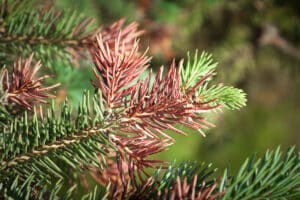
Can You Stop a Tree From Dying?
In some cases, trees will only show major visible signs of an issue when they’re already dead, or close to it. Even the most careful approach to tree care won’t make much of a difference, unfortunately. It’s important to keep your expectations realistic when it comes to a dying tree.
However, there are plenty of things you can do to help your trees. Consider a yearly inspection of your trees to identify potential problems (or call an arborist to take a look for you). It’s easier to catch smaller signs of a disease or infestation when you’re more familiar with your trees.
Ensuring trees aren’t packed too closely together, either with each other or other vegetation, is also an important step. In the long term, it’s much better to have a smaller number of trees thrive. then to have a larger number barely survive.
Can a Dying Tree Be Saved?
Arborist Strategies for Tree Recovery
| Treatment | When It’s Most Effective | Key Benefits |
|---|---|---|
| Proper Watering & Mulching | Early signs of drought stress or nutrient deficiency | Revives tree vigor, stabilizes soil temperature, and protects roots from damage |
| Soil Aeration & Root Care | Compacted soils in yards, construction zones, or high-traffic areas | Increases oxygen and water absorption, encourages healthy root development |
| Pruning Dead or Diseased Branches | Fungal infections, canopy thinning, or damaged limbs | Improves airflow, reduces disease spread, and promotes stronger, balanced growth |
| Targeted Pest & Disease Treatments | Infestations like ash borer, oak wilt, aphids, or scales | Prevents further damage, extends the tree’s lifespan, and keeps your landscape healthy |
| Fertilization & Nutrient Support | Poor soil quality or nutrient depletion | Boosts growth, strengthens leaves, and enhances overall tree health |
| Cabling & Bracing | Structurally weak, storm-damaged, or historic trees | Stabilizes limbs, protects valuable trees, and prolongs their life |
When Tree Removal Becomes the Only Option
Not every tree can be saved. In some cases, removal is the safest and most responsible choice. Consider professional tree removal in Portland, Oregon if:
-
Over half the canopy or trunk is dead – The tree no longer has sufficient living tissue to recover.
-
The tree is unstable or leaning dangerously – Poses a safety hazard to people, pets, or structures.
-
The trunk is hollow or heavily decayed – Structural integrity is compromised.
-
Untreatable disease or pest infestations – Threatens surrounding trees and landscaping.
-
Treatment costs outweigh the benefits – When saving the tree is impractical or unlikely.
Why Professional Removal Matters
Certified arborists in Portland use specialized equipment and techniques to safely remove trees while minimizing risk to your property and landscape. Removal is done efficiently, following local safety codes and regulations, ensuring your property stays protected.
Work With Professional Certified Arborists
Certified arborists are tree experts. They have the deep knowledge and experience needed to identify specific issues in trees, then select and use the most appropriate treatment.
From simple changes to much more involved efforts to save a dying tree, they can build a plan with the best chance of success.
We are Oregon’s most trusted tree service company. Schedule a free estimate today!
FAQs – Tree Removal Portland Oregon
1. How do I know if my tree needs to be removed in Portland?
Signs your tree may need removal include dead or decaying branches, leaning dangerously, hollow trunks, severe disease, or pest infestations that threaten nearby trees. A certified arborist can evaluate the tree’s health and recommend the safest option.
2. Can a dying tree be saved by a certified arborist?
Yes! Certified arborists in Portland can often restore trees using pruning, pest/disease treatments, fertilization, mulching, soil aeration, and cabling or bracing. Early intervention increases the chance of recovery.
3. How much does tree removal cost in Portland, Oregon?
Costs vary based on tree size, location, accessibility, and condition. MonkeyMan’s provides free estimates for safe and professional tree removal services throughout Portland.
4. Is tree removal safe for my property?
When performed by certified arborists, tree removal is completely safe. They use specialized equipment and techniques to minimize risks to structures, landscaping, and people.
5. How long does tree removal take?
Most residential tree removals in Portland can be completed in a few hours, depending on tree size and complexity. Larger or hazardous trees may take longer to ensure safety.
6. Can you remove tree stumps as well?
Yes! We offer professional stump grinding and removal services to fully clear your property, prevent pest issues, and prepare the area for landscaping.
7. What should I do if my tree is diseased or infested?
Contact a certified arborist immediately. Early intervention with pruning, treatment, or removal can prevent disease or pests from spreading to other trees in your yard.
8. Do you handle emergency tree removal in Portland?
Absolutely. MonkeyMan’s offers emergency tree removal for storm-damaged, fallen, or hazardous trees to protect your property and safety.